


Speaking a foreign language can boost your career and business success. For example, knowing Spanish might win you a client in Mexico by building trust during negotiations, while adding Mandarin to your CV can make you stand out against tough job competition in global trade.
The increasing number of translation tools and gadgets facilitates basic communication. However, they often overlook cultural nuances, humor, and personal connections that are crucial in professional settings. That's why learning a language suited to your goals helps you build stronger relationships with clients and employers. Are you unsure which language best suits your needs? Check our guides on the easiest languages for English speakers and the most challenging ones to learn, and weigh your options. Discover the top 12 languages to grow your career and win in international business.
#1 English
English is the international language of business, connecting professionals in multinational teams and enabling global cooperation. English is the language of global business communication, negotiation, and everything in between. Mastering English at a proficient level offers speakers a competitive edge in the job market. Most educational resources, professional courses, and certifications are in English. Besides words, phrases, and sentences, business English is rich in idioms [internal linking], widely used in negotiations, presentations, and interviews.
📍 Main areas: United States, Canada (except Quebec), United Kingdom, Ireland, Australia, New Zealand.
👶 Native speakers: ~380 million
🌍 Global speakers: ~1.5 billion
💼 Key industries: Finance, IT, consultancy, healthcare, education, automotive (USA, UK), electronics, aerospace, pharmaceuticals (USA, UK)
#2 Mandarin Chinese
China's global economic power makes Mandarin Chinese one of the most useful languages for one's career. China is renowned worldwide as a major manufacturing hub, often referred to as "The World's Factory." And for good reason - around a quarter of all goods globally are made in China. Learning the language opens access to Chinese markets and gives you a competitive edge in global trade. Although learning Chinese may come with a steep learning curve, it's incredibly beneficial for Westerners to know it.
Popular dialects include the so-called "standard Mandarin," spoken in China and Taiwan; Wu, spoken in Shanghai and its surrounding areas; and Cantonese (Yue), from Guangdong, Hong Kong, as well as in Chinese diaspora communities.
📍 Main areas: China, Taiwan, Singapore.
👶 Native speakers: ~990 million.
🌍 Total speakers: ~1,184 million.
💼 Key industries: Manufacturing (electronics, machinery, textiles in China), technology (China, Singapore), finance (China), e-commerce (China), logistics (Singapore).
#3 Spanish
Spanish holds the position of the second most widely spoken language in the world, used extensively in the Americas and Europe. Mastering Spanish opens the door to travel and job opportunities in bilingual regions, with an average of 12% of people in North America speaking Spanish.
Popular Spanish dialects include Castilian Spanish, considered the standard dialect in Spain; Mexican Spanish, typical of Mexico; and Rioplatense Spanish, which is spoken in Argentina and Uruguay.
📍 Main areas: Spain, Mexico, Colombia, Argentina, Peru, Chile, Central America, parts of the United States, and Equatorial Guinea.
👶 Native speakers: ~484 million.
🌍 Total speakers: ~558 million.
💼 Key industries: Tourism (Spain, Mexico), food and beverage exports (Spain, Argentina), healthcare (United States, Mexico), manufacturing (machinery, foodstuffs in Spain), retail (Colombia, Mexico).
#4 Hindi
India's job market is incredibly attractive for foreign investors. From qualified freelancers charging a fraction of the price for their services to entire companies outsourcing local talent, India is appealing to businesses worldwide. Learning Hindi is essential for cultural immersion and negotiation.
In regions such as Bihar and Uttar Pradesh, the Bhojpuri dialect is commonly heard, while Kanauji is primarily spoken in western Uttar Pradesh.
📍 Main areas: India (northern and central regions), Fiji, Mauritius.
👶 Native speakers: ~345 million.
🌍 Total speakers: ~609 million.
💼 Key industries in India: Information technology and outsourcing, entertainment, telecommunications, retail, and manufacturing.
#5 Arabic
Arabic holds a top position in the global market due to the economic power of Arabic-speaking countries, especially in the Middle East and North Africa. To tap into career opportunities in diplomacy, trade, and the energy sector, consider learning Arabic.
Popular Arabic dialects include the following:
- Egyptian Arabic is spoken in Egypt.
- Levantine Arabic is considered more melodic and dominant in Syria, Lebanon, Jordan, and the Palestinian territories.
- Gulf Arabic, spoken in Saudi Arabia and the UAE, is often preferred in business communication.
📍 Main areas: Egypt, Saudi Arabia, UAE, Iraq, Morocco, Algeria, Jordan, and other Middle Eastern and North African countries.
👶 Native speakers: ~373 million (all Arabic dialects).
🌍 Total speakers: ~335 million (including Modern Standard Arabic).
💼 Key industries: Energy (oil and gas in Saudi Arabia, UAE), construction (UAE), real estate (UAE), healthcare (Saudi Arabia), international development (Egypt, Jordan).
#6 French
As the language of diplomacy, French is widely used in Europe, Africa, and Canada. French is the official language of international organizations such as the United Nations (UN), the European Union (EU), the World Trade Organization (WTO), and the International Red Cross (together with English and Spanish). In addition to the business advantages, speaking French will allow you to view Francophone cultural festivals in a new light. Explore Quebec's Winter Carnival with a deeper cultural understanding.
Standard French is often associated with the Parisian dialect. It's widely used everywhere, from classrooms to TV and the written media. Quebecois French, spoken in Quebec, Canada, differs in pronunciation, has a more informal grammar, and vocabulary variations. In West Africa, there are multiple French dialects and variations.
📍 Main areas: France, Canada (Quebec), Belgium, Switzerland, Democratic Republic of Congo, Senegal, Côte d'Ivoire, and other Francophone African nations.
👶 Native speakers: ~74 million.
🌍 Total speakers: ~312 million.
💼 Key industries: Fashion and luxury goods (France), diplomacy (France, Canada), culinary arts (France), international NGOs (France, Senegal), mining (Democratic Republic of Congo).

Speak a new language with confidence!
Build fluency faster with FunEasyLearn — just 10 minutes a day is enough to make real progress.
#7 Russian
If you're doing business with the markets of Eastern Europe and Central Asia, learning Russian is a good idea. The official language of Russia, a global leader in energy and raw materials, Russian offers job prospects in industries like oil, gas, and technology. The language also plays an important role in diplomacy and trade across former Soviet states. Standard Russian, based on the Moscow dialect, is used in the media and business, while regional dialects, such as Siberian Russian, feature phonetic and vocabulary variations.
📍 Main areas: Russia, Belarus, Kazakhstan, Kyrgyzstan.
👶 Native speakers: ~145 million.
🌍 Total speakers: ~25 million.
💼 Key industries: Energy (oil and gas in Russia), aerospace (Russia), technology (Russia), mining (Russia, Kazakhstan), international trade (Belarus, Kyrgyzstan).
#8 Portuguese
Spoken in Brazil, Portugal, and parts of Africa, Portuguese is an essential language in global trade. Many business negotiations in Brazil are conducted in Portuguese, rather than English. That's one of the settings in which speaking the language is a great asset when doing business with Brazil or emerging African economies such as Angola.
Keep in mind that European Portuguese is standard for Portugal, while Brazilian Portuguese, spoken in Brazil, has a slightly distinct accent and vocabulary variations. As you may expect, Angolan Portuguese is influenced by African languages.
📍 Main areas: Brazil, Portugal, Angola, Mozambique, Cape Verde, and parts of East Timor and Macau.
👶 Native speakers: ~230 million.
🌍 Total speakers: ~264 million.
💼 Key industries: Agriculture (Brazil), renewable energy (Brazil, Portugal), tourism (Portugal, Brazil), mining (Brazil), international trade (Angola, Mozambique).
#9 German
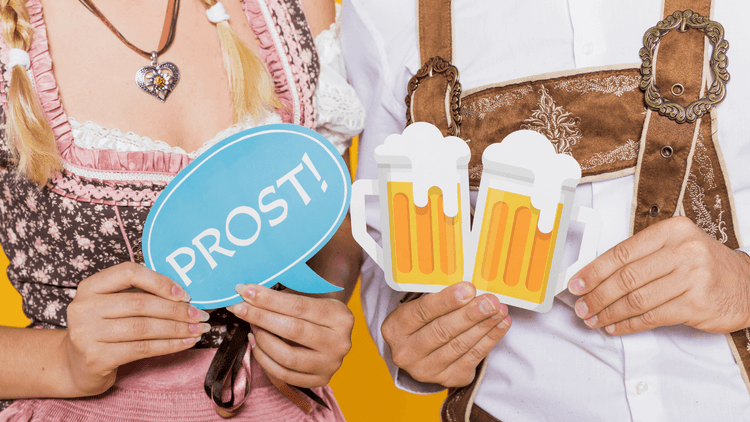
As the main language in European business, engineering, and innovation, German unlocks access to one of the most profitable customer segments - the German-speaking market. Learn German to connect with business partners and clients, and also experience Oktoberfest, the Cologne Carnival, or Walpurgis Night. German cutting-edge startups and tech make it one of the most important financial and entrepreneurial hubs in Europe.
Standard German is used throughout the country, in the media, academic contexts, and business settings. Bavarian German, spoken in Bavaria, is slightly different from the standard version, and the same applies to the variant spoken in Switzerland.
📍 Main areas: Germany, Austria, Switzerland, Liechtenstein, and parts of Belgium and Luxembourg.
👶 Native speakers: ~75 million.
🌍 Total speakers: ~130 million.
💼 Key industries: Automotive (Germany), machinery and chemicals (Germany), pharmaceuticals (Switzerland, Germany), finance (Germany, Switzerland), engineering (Austria).
#10 Japanese
Japan has one of the most influential markets in the world. Among the best-developed business sectors are vehicle and electronics manufacturing, as well as pharmaceuticals and media. Learning Japanese opens the doors to one of the largest hubs of technology, high-tech innovation, and global pop culture. When learning Japanese, you gain a deeper understanding of Japanese culture, particularly regarding politeness, which is indispensable when doing business with Japan.
Pay attention to the various dialects in Japanese and look into significant differences before traveling to specific areas. The Tokyo-ben dialect is considered a standard form of the Japanese language. It is extensively used in mass media, education, and popular culture. The Kansai-ben dialect, spoken in Osaka and Kyoto, is considered more informal. One more distinct dialect is the one spoken in Hiroshima, characterized by a higher pitch and regional expressions.
📍 Main areas: Japan, and Japanese diaspora communities in Brazil, the United States, and Peru.
👶 Native speakers: ~123 million.
🌍 Total speakers: ~123+ million.
💼 Key industries: Technology (Japan), automotive (Japan), electronics (Japan), gaming (Japan), tourism (Japan).
#11 Korean
Best known for K-pop, dramas, and its influence on East-Asian markets, Korea is a big hit with professionals seeking career opportunities in tech and entertainment. South Korea has one of the largest economies, home to family-owned conglomerates such as LG, Hyundai, and Samsung. So, if you're in the automotive, tourism, or technology sectors looking to expand to the Korean market, learning the language would be a strong asset. Korean skills are also essential in education, business, and the entertainment industry.
The most popular dialect is the standard one spoken in Seoul, followed by the Gyeongsang dialect typical of Busan and Daegu, and Jeolla, the dialect found in Jeonju and Gwangju.
📍 Main areas: South Korea, North Korea, and Korean diaspora communities in China, Japan, and the United States.
👶 Native speakers: ~82 million.
🌍 Total speakers: ~82+ million.
💼 Key economic industries: Technology (South Korea), automotive (South Korea), entertainment (K-pop, K-dramas in South Korea), semiconductors (South Korea), shipbuilding (South Korea).
#12 Italian
For industries such as fashion, luxury goods, international business, and cuisine, Italian is an excellent language to learn. Its difficulty level is relatively low, comparable to that of Spanish, French, and other Romance languages.
Italy is rich in dialects, the standard one being Tuscan-based, derived from Florence. The Neapolitan dialect is spoken in Naples and southern Italy. It features influences from Spanish and French, and is characterized by dropping final vowels. The Sicilian dialect is typical of Sicily, with notable vocabulary and pronunciation differences, influenced by Greek, Arabic, and Norman French.
📍 Main areas: Italy, Switzerland (Ticino), San Marino, Vatican City, and Italian diaspora communities in Argentina, Brazil, and the United States.
👶 Native speakers: ~64 million.
🌍 Total speakers: ~68 million.
💼 Key industries: Fashion and luxury goods (Italy), automotive (Italy), machinery (Italy), tourism (Italy), culinary arts (Italy).
Learn Languages with FunEasyLearn
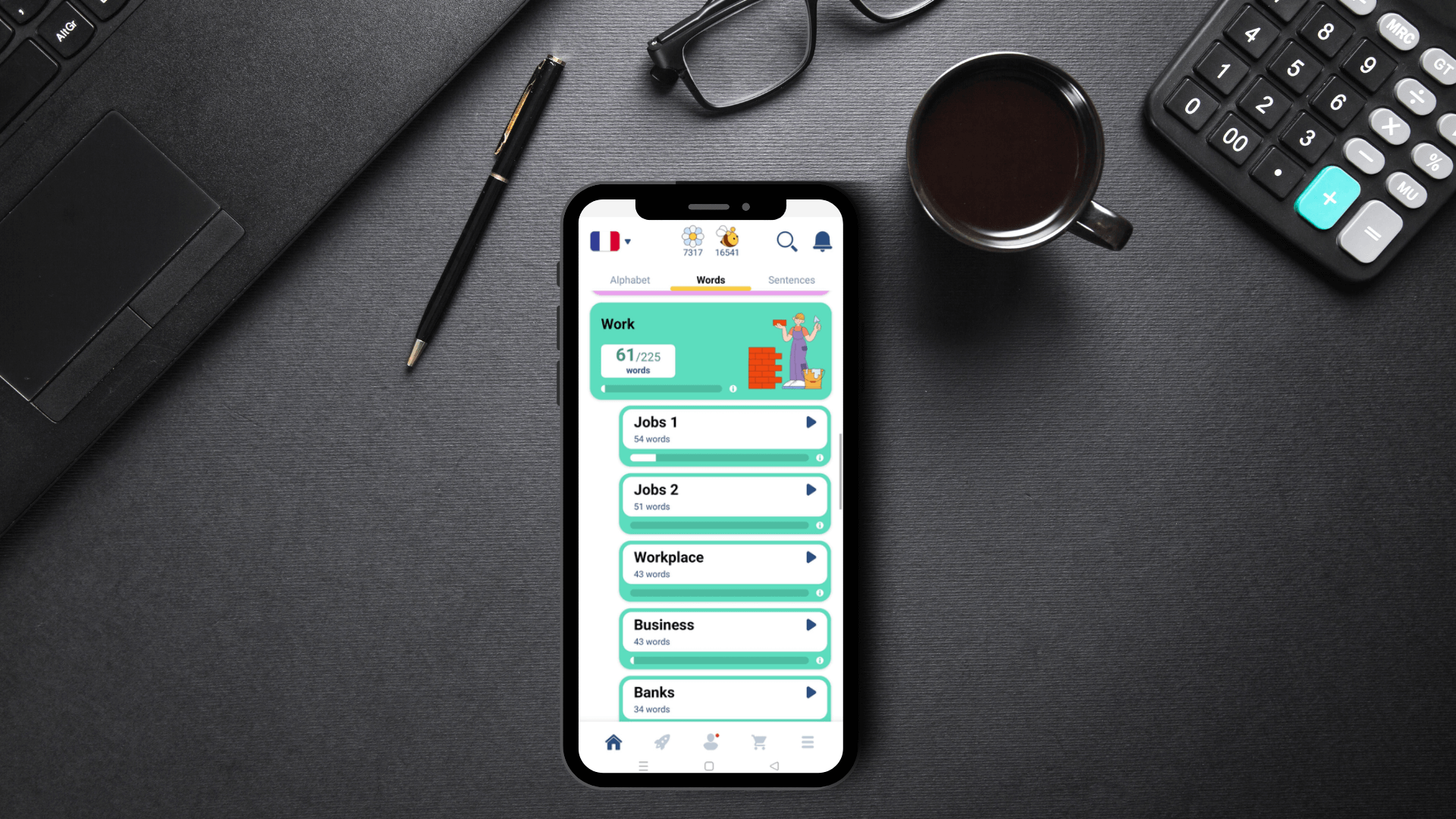
Learning a language like Mandarin or Spanish can help you win clients in global markets or stand out in a tough job search. FunEasyLearn offers courses in the top 12 languages for business and career growth, perfect for employees aiming to advance or managers training their teams. A simple dashboard enables managers to check team progress, keeping everyone on track. You get all lessons, from beginner to expert, with no ads to distract you. Offline mode means you can study during travel or downtime. Ready to grow your career with a new language?
What you get:
- An extensive choice of courses, including all the languages in the list of the best languages to learn for career advancement and international business.
- Access to all topics. Take full advantage of free, unrestricted access to all the topics, regardless of your current level.
- Offline access. Learn anytime and anywhere, on business trips or in remote areas with limited internet access.
- Enjoy uninterrupted learning with a zero-ads policy for all plans.
Are you ready to seize global business opportunities?