




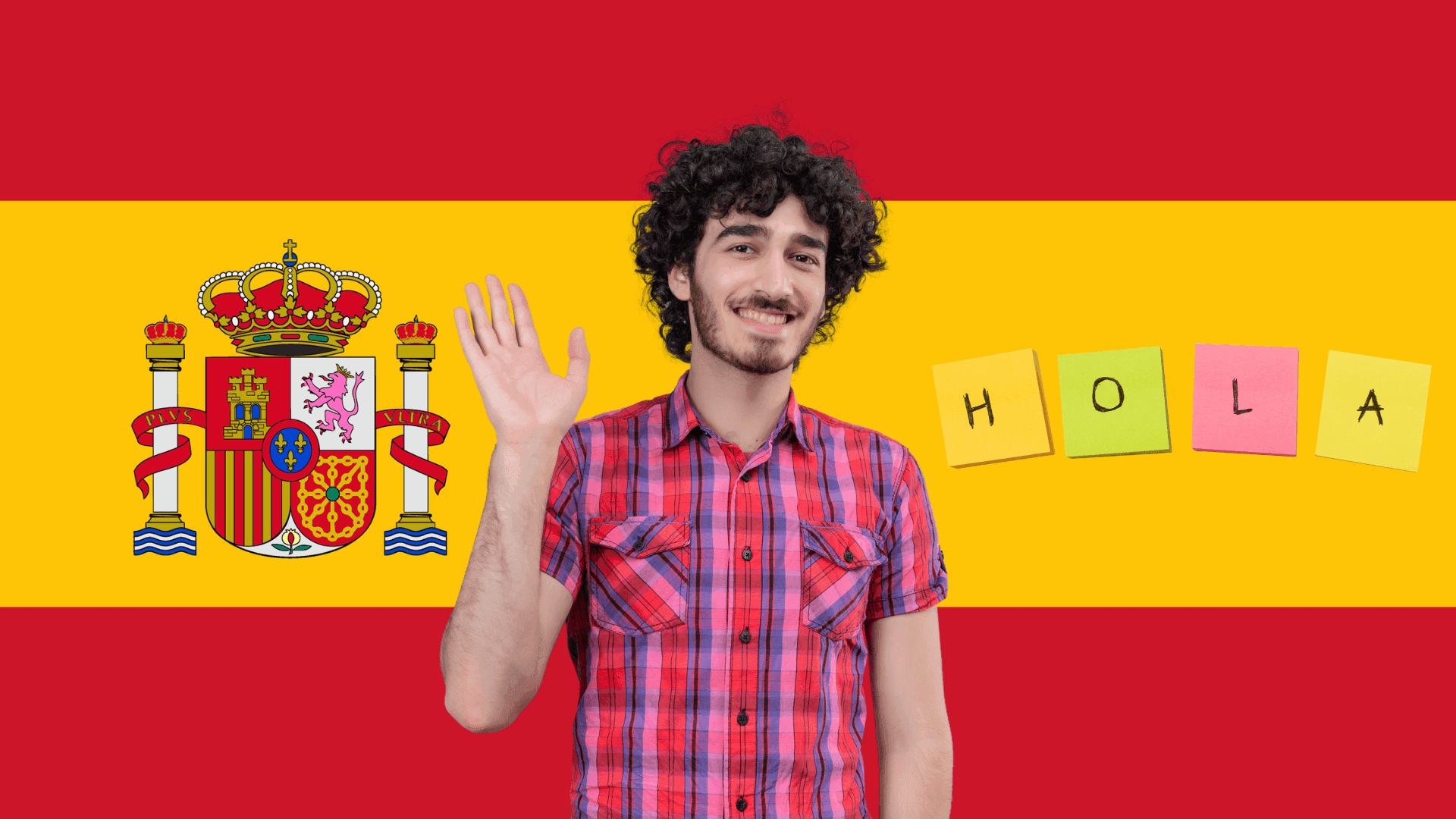
Did you know you could offend native Spanish speakers if you don't greet them properly or at all? For instance, walking into a room full of Spanish speakers without greeting everybody can come across as disrespectful. After all, Spanish greetings are more than a mere formality. It is a way to make meaningful connections with around 500 million Spanish speakers across more than 20 countries. Let's explore different ways to greet someone in Spanish so you fit in better in the target-language community.
Essential Spanish Greetings Everyone Should Know
Mastering a handful of universal greetings will help you start conversations, ask for information, or connect with people in Spanish. Walk confidently into a café in Madrid or Barcelona, feeling welcomed as you can greet people in their native language. Learn what they use every day and master basic phrases to sound natural.
|
Greeting |
Formality |
Usage notes |
|
Hola |
Neutral |
"Hello" - the universal default greeting
used anytime & anywhere |
|
Buenos días |
Neutral/ |
"Good morning," literally translated as
"good days," used from sunrise until noon. |
|
Buenas tardes |
Neutral/ |
"Good afternoon," used from noon until sunset. |
|
Buenas noches |
Neutral/ |
"Good
evening"/"Good night," used after sunset. |
|
Buenas |
Informal |
"Hi," "Hi there," a casual shortened form of
time-based greetings |
|
Mucho gusto |
Formal |
"Much pleasure/nice to meet
you," used when you first meet someone |
|
Encantado/a |
Formal |
"Delighted," used when
you first meet someone. |
"Hola" tops the list of Spanish greetings. It's neutral, it fits most situations, and is universally understood. Try to expand your vocabulary beyond this, as Spanish speakers prefer specific greetings. For example, "Buenos días" is used from sunrise until noon, "Buenas tardes" in the afternoon until sunset, and "Buenas noches" for both "Good evening" and "Good night" after sunset.
In casual situations, you will hear "buenas" as one of the most common ways to greet someone, such as a close friend or family member. It is often used in contexts such as interacting with a taxi driver or a barista. Intermediate learners use it to sound more natural than a dictionary.
Formal vs. Informal Greetings
Formality plays a central role in Spanish. In a social interaction, you need to choose between the formal "usted" and the informal "tú." Start formally if you are unsure. This avoids awkwardness, especially with new people. Switch to informal once invited. In social settings, informal is fine.
Formal Greetings
Use a formal tone with elders, authority figures, strangers, and in professional settings.
· "¿Cómo está?" or "¿Cómo está usted?" — How are you? (respectful)
· "Mucho gusto" — Nice to meet you (first encounters)
· "Encantado/a" — Delighted to meet you (slightly more enthusiastic)
Informal Greetings
Use informal greetings with friends, family, or anyone your age or younger in casual settings:
· "¿Cómo estás?" — How are you? (friendly)
· "¿Qué tal?" — How's it going? (extremely common, very casual)
· "¿Qué pasa?" — What's up? (what's happening)
· "¿Cómo te va?" — How's it going for you?
Note: A useful shortcut for successfully differentiating between formal and informal forms of the verb "to be" in Spanish is the ending. "Tú" has an "s" at the end ("estás"), while the formal "usted" doesn't ("está").

Speak a new language with confidence!
Build fluency faster with FunEasyLearn — just 10 minutes a day is enough to make real progress.
Regional Spanish Greetings
Learning regional Spanish greetings is a great idea. Spanish varies across countries and cultures, so using the local dialect shows respect and cultural awareness. This also builds your fluency.
Spain
In Spain, "¿Qué tal?" means "All good?" and is very popular among friends and peers in Madrid and Barcelona. Variations include "¡Hola, qué tal!" (Hi, how's it going?) and "¿Qué tal el fin de semana?" (How was the weekend?) Avoid using it with strangers, elders, or in formal settings.
Mexico
The Mexican Spanish equivalent of "What's up?" is "¿Qué onda?" Literally "what wave," this is a popular casual greeting in which "onda" means "vibe." You may also hear it in parts of Central/South America, but not in Spain.
Costa Rica
"Pura vida" literally translates as "pure life." The expression reflects a local philosophy of optimism, gratitude, and a more laid-back attitude. It works as "hello" in casual greetings with a friend or as a "goodbye." It can also mean "you're welcome," for instance when coming from a salesperson. Last, but not least, "pura vida" means "everything is great."
Venezuela
In Venezuela, "Épale" or "Epa" is a casual greeting meaning "Hey!" or "What's up?" among friends. It can also show enthusiasm, as in: "Épale, ¿en serio?" ("Whoa, really?")
Cuba
In Cuban slang, "¿Qué bolá?" translates as "how’s it going?" and is extensively used among friends. "¿Qué bolá, asere?" means "What’s up, dude?" Avoid using it with the elderly.
Chile
Chilean greetings are unique. "Wena" (from "buena") is a friendly, casual "Hey" among close friends. "¿Qué onda, microonda?" means "What's up?" adding humor with its rhyme.
Peru
In Peruvian Spanish, locals will often say "¡Habla!" ("Speak!" or "What's up?"). The word is used among friends as a super casual greeting. To young Peruvians, this is an invitation to share updates, make plans, or gossip, often pairing it with "¡Ya, pe!" ("Alright, dude!"), "¡Dime!" ("Tell me!"), and getting a casual reply like "¡Aquí nomás!" ("Just hanging!").
Argentina
In Argentina, "¿Qué hacés?" ("What do you do?") means "What's up?" Informal and quick, it's often followed by "¡Boludeando!" ("Chilling!").
Physical Greetings
If you go to Spain, be prepared for the two-kiss greeting, just in case. It's important to start with the right cheek, then the left, slightly touching the cheeks as you make a light kissing sound. This is for friends and family, mainly, expanding to more formal settings. Nonetheless, a firm handshake is the golden standard in strictly business contexts.
Mexico sticks to handshakes (and occasional hugs with friends), while Argentina uses a one-cheek kiss and a quick hug. Peru adds a back pat after the handshake, especially among guys. Colombia goes for one kiss (women or mixed), Chile keeps it to one kiss or handshakes, Venezuela mixes kisses with close handshakes, and Cuba favors big hugs or one kiss with pals. Watch and copy the other person—it's the easy way to fit in.
Responding to Greetings in Spanish
Spanish speakers expect you to mirror their greeting style. If greeted informally, respond with the same register, like "Bien, ¿y tú?" Adding the informal "¿y tú?" keeps the conversation going by reciprocity.
Reply with "¡Muy bien!" ("Very well!") in Spain, or "¡Aquí andamos!" ("Just hanging around!") in Peru. For quick chats, use "Nada" ("Nothing much") or "Todo bien" ("All good"). In Mexico, try "¡Todo chido!" and in Argentina, "¡Tranqui!" When addressed formally, reply "Bien, gracias, ¿y usted?" to show respect.
Go Beyond Basic Greetings with FunEasyLearn
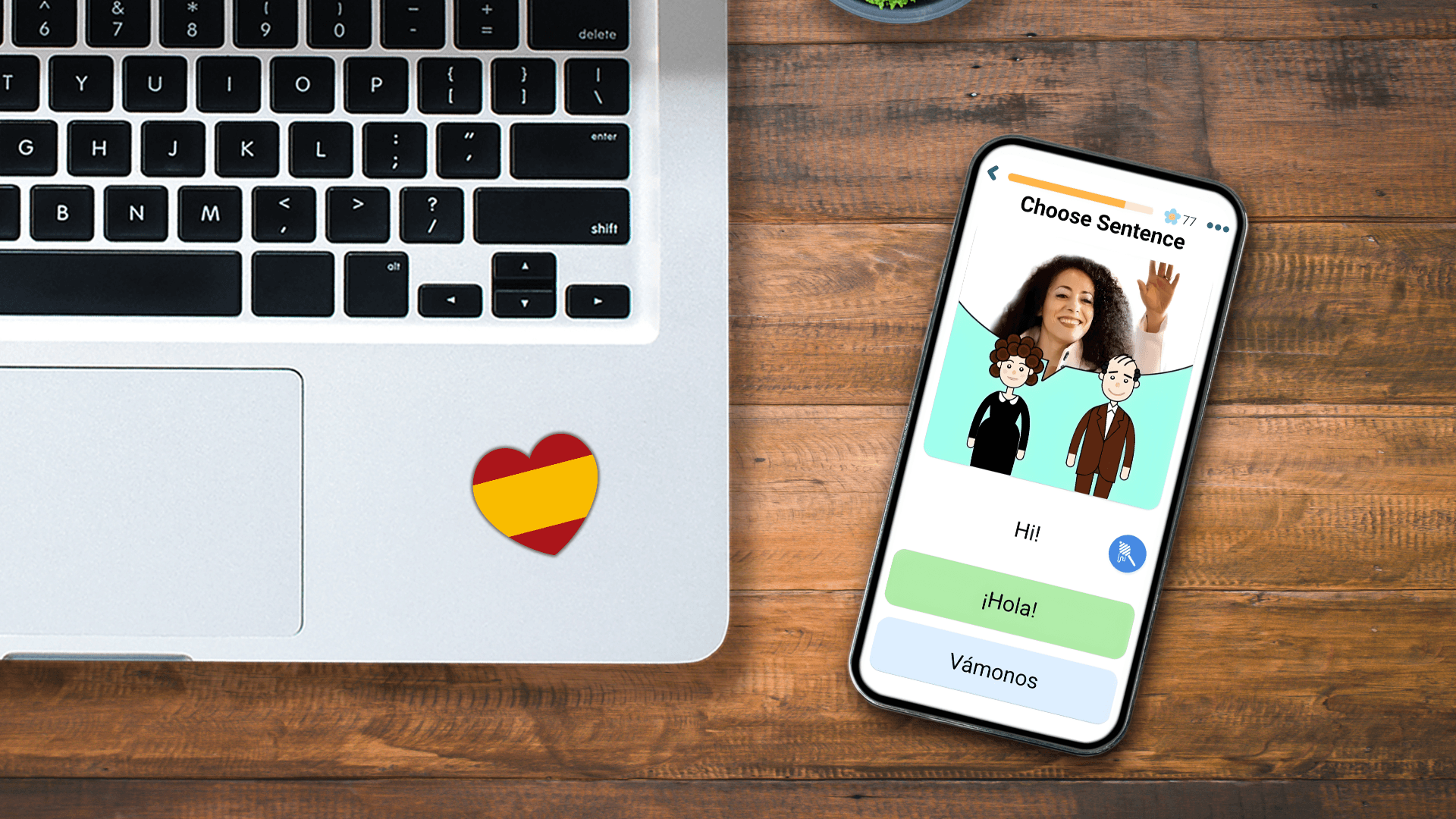
Saying "Hola" and "¿Cómo estás?" is just the beginning. Expand your vocabulary with more proficiency levels. The language-learning app helps millions of people worldwide master new words and sentences.
💹 6,000 words and 5,000 sentences
Words and sentences are essential for conversation. A wider vocabulary helps you speak better, especially with synonyms.
🎮 35+ fun vocabulary games
Make learning fun, and you will look forward to your next study session. With over 35 educational games, learning and reviewing vocabulary become pleasant activities. The points system ensures your brain gets the reward it craves, keeping you motivated to learn more.
🖼️ Illustrations that help you memorize
Over 15,000 illustrations pair with each word or sentence to help learners. Images speed understanding and memorization, and boost focus.
🔁 Review system
The review system tracks which words you forget, optimizing your review sessions. That way, you learn more with less effort.
🎧 Hands-free mode
Learn or review words and sentences when you're doing mindless tasks, house chores, running errands, commuting, walking the dog, and more. You can play the vocabulary automatically on a loudspeaker or with a pair of headphones, whichever best fits your environment.
⭐ Favorites
Create custom study lists with Favorite groups. You can put together lists of words and sentences from one topic or from several topics and subtopics. That empowers learners to prepare for an upcoming conversation in the target language.
Planning to learn Spanish?