





The truth you won't find in most Spanish textbooks is that native speakers rarely end conversations with "¡Adiós!" Using it with a group of friends you know you will see tomorrow can be awkward. The good news is that once you master your Spanish greetings to open conversations, it's easy to learn how to end them naturally. Are you ready to learn more ways to say goodbye? Let’s dive in!
The Standard "Adiós"
The first word that comes to mind when saying goodbye is, of course, "adiós." It’s a classic textbook farewell. However, it is a tricky choice for learners. For instance, if you know you won’t see the person in a while, you can use "adiós." For example, if your neighbor is moving to another country or you’re saying goodbye to someone who has passed away, it's appropriate to use "Adios." However, if your friend pops in for coffee a few times a week, use "nos vemos" (see you) or "hasta luego" (see you later) to bid them farewell.
"Adiós" has a religious origin, from "A Dios vos acomiendo, "which means entrusting a person to God, since you're unsure when you'll meet again. Recorded in the late 1500s, it resembles the French "adieu," Italian "addio," and English "goodbye." All serve as short blessings for someone before a long separation. Thus, Spanish speakers may not use "adiós" as often as English speakers do, opting for alternatives such as "hasta luego" (see you later).
The “Hasta” Phrases
The so-called "Hasta" family offers versatile short-term farewells. "Hasta luego" (See you later) is the most popular and neutral option in everyday Spanish. Native speakers often combine expressions, such as "¡Hasta luego, nos vemos!" (See you later, see you) or "¡Venga, hasta pronto!" (Alright, see you soon).
| Spanish | English | IPA Transcription |
|---|---|---|
| Hasta luego | See you later | [ˈas.ta ˈlwe.ɣo] |
| Hasta pronto | See you soon | [ˈas.ta ˈpɾon.to] |
| Hasta mañana | See you tomorrow | [ˈas.ta maˈɲa.na] |
| Hasta la próxima | Until next time / See you next time | [ˈas.ta la ˈpɾok.si.ma] |
| Hasta entonces | Until then | [ˈas.ta enˈton.ses] |
| Hasta la vista | See you / Until we meet again / So long | [ˈas.ta la ˈβis.ta] |
"¡Hasta pronto!" (See you soon) is for when you'll meet again soon, perhaps the same day or in a few days. It's warmer than "hasta luego" and common among friends. "Hasta mañana" is used when you’ll see someone the next day.
"¡Hasta la próxima!" (Until next time) is a common phrase in business contexts. Its professional undertone is ideal for ending conferences, networking sessions, and other contexts.
"¡Hasta entonces!" (Until then) is useful when you have agreed to meet someone at a specific point in the future. Use this when having a follow-up meeting or appointment.
"¡Hasta la vista!" (Until we meet again) is a grammatically correct way to bid someone farewell. However, it is less popular than "¡Hasta luego!" or "¡Hasta pronto!" among native speakers.
Casual Ways to Say "Goodbye" in Spanish
While "Adiós" is the most well-known farewell, native speakers use many informal options. Mastering these helps you blend into Spanish culture. Common relaxed ways to say "bye" to friends and family are listed below.
"Chao" / "Chau"
The Spanish term "Chao" [ˈt͡ʃao] is inspired by the Italian “Ciao,” meaning “Hello.” Spanish speakers borrowed it and use "Chao" to say "bye," especially in Latin America among friends and family. The variation "Chau" [ˈt͡ʃau] is common in Argentina, Uruguay, and Chile. Both are informal and fit casual situations.
"Nos Vemos"
"Nos vemos" is a casual way to end a conversation, similar to English "see ya." It's popular in chats with friends when you expect to see them soon. Pronounce the [v] as [b].
Mexican Spanish has a twist on "Nos Vemos": "¡Nos vidrios!" [nos ˈβið.ɾjos]. The last word means "glass," making this a playful, joking farewell.
"Cuídate" & "Que te vaya bien"
"Cuídate" [ˈkwi.ða.te] means "Take care," and "que te vaya bien" [ke te ˈβa.ʝa ˈβjen] translates as "Have a good one." Both are thoughtful ways to say goodbye.
"Suerte"
If someone faces a challenge, say "Suerte" or "Buena suerte" to wish them luck. "Buena suerte" is common in both formal and informal Spanish. The shorter "Suerte" is more colloquial in Latin America, used alone or with other farewells. For example: "Hasta luego, buena suerte" means "See you later, good luck."
"Sale"
In Mexico, say "Sale" [ˈsa.le] with friends when you leave. It means "Ok, cool, I'm out." Common variations include "Sale pues" [ˈsa.le ˈpus] (OK then), "sale vale" [ˈsa.le ˈba.le] (OK, fine), or "sale, vale, bye" [ˈsa.le ˈba.le ˈbaj]. Avoid using "Sale" in formal settings.

Speak a new language with confidence!
Build fluency faster with FunEasyLearn — just 10 minutes a day is enough to make real progress.
Mixing and Matching Goodbyes
In daily life, Spanish speakers mix and match farewells, which can confuse learners. Mastering these combinations will make you sound fluent. There are formal goodbyes for superiors, informal ones for close people, and neutral phrases for most situations.
Formal
When speaking to people in authority or those you don’t address with "tú," use more formal farewells. This ensures you respect social boundaries, especially in conversations with supervisors, teachers, or police.
Spanish: "Nos vemos luego, que le vaya bien." [nos ˈbe.mos ˈlwe.ɡo | ke le ˈba.ʝa ˈβjen]
English: See you later, hope it goes well for you.
Context: This is a respectful farewell that can be used with colleagues, clients, or people you are not on familiar terms with.
Alternative: "Nos vemos pronto. Que le vaya bien." [nos ˈbe.mos ˈpɾon.to | ke le ˈba.ʝa ˈβjen] - See you soon. Hope it goes well for you.
Spanish: "Conversamos más tarde." [aˈbla.mos mas ˈtaɾ.de]
English: We’ll talk later.
Spanish: "Estamos en contacto" [esˈta.mos en konˈtak.to]
English: We’ll stay in touch.
Spanish: "Hasta luego, cuídese mucho." [ˈas.ta ˈlwe.ɡo | kwiˈðe.se ˈmu.tʃo]
English: See you later, take care (a lot).
Alternative: "Hasta pronto. Cuídese y que tenga un buen día." [ˈas.ta ˈpɾon.to | kwiˈðe.se i ke ˈten.ɡa um ˈbwen ˈdi.a] - See you soon. Take care and have a good day.
Context: A polite goodbye after a conversation or meeting.
Informal
With friends, family, and close colleagues, keep it casual. Mix phrases like "cuídate," "chao," "nos vemos," or "hablamos luego" to make a natural goodbye.
Spanish: "Te veo luego, que te vaya bien." [te ˈbe.o ˈlwe.ɡo | ke te ˈba.ʝa ˈβjen
English: See you later, hope it goes well for you.
Spanish: "Adiós. Nos vemos mañana. Cuídate." [aˈðjos | nos ˈbe.mos maˈɲa.na | kwiˈða.te]
English: Goodbye. See you tomorrow. Take care.
This combination is common for saying goodbye to colleagues or peers. For extra politeness, use “Cuídese” [kwiˈðe.se].
Spanish: "Hablamos luego, chao." [aˈbla.mos ˈlwe.ɡo | ˈtʃa.o]
English: We’ll talk later, bye.
Tip: You can also add "Que tenga un buen día." [ke ˈten.ɡa um ˈbwen ˈdi.a] (Have a good day.)
Close alternatives include the following:
"Hablamos luego. Adiós." [aˈbla.mos ˈlwe.ɡo | aˈðjos] - We’ll talk later. Goodbye.
"Hablamos más tarde." [aˈbla.mos mas ˈtaɾ.de] - We’ll talk later.
Spanish: "Me voy. Nos vemos. Que tengas un buen día." [me ˈboj | nos ˈbe.mos | ke ˈten.ɡas um ˈbwen ˈdi.a]
English: I’m leaving. See you. Have a good day.
Context: Use this phrase when you leave a place such as your home or a friendly get-together.
Alternative: "Me retiro. Nos vemos. Que tenga un buen día." [me reˈti.ɾo | nos ˈbe.mos | ke ˈten.ɡa um ˈbwen ˈdi.a] - I’m leaving, see you, have a good day.
Spanish: "Hasta luego, cuídate mucho." [ˈas.ta ˈlwe.ɡo | kwiˈða.te ˈmu.tʃo]
English: See you later, take care (a lot).
Context: Polite goodbye to a colleague, client, teacher, or someone older after a conversation or meeting.
Neutral
You’ll notice native speakers link neutral phrases to a standard goodbye, similar to English "See you soon, bye." The examples below fit friends, acquaintances, and formal contexts alike.
Spanish (informal): "Hasta luego, cuídate mucho." [ˈas.ta ˈlwe.ɡo | kwiˈða.te ˈmu.tʃo]
English: See you later, take care (a lot).
Spanish (formal): "Hasta luego, cuídese mucho." [ˈas.ta ˈlwe.ɡo | kwiˈðe.se ˈmu.tʃo]
English: See you later, take care (a lot).
Alternative: Hasta pronto. Cuídese y que tenga un buen día. [ˈas.ta ˈpɾon.to | kwiˈðe.se i ke ˈten.ɡa um ˈbwen ˈdi.a] - See you soon. Take care and have a good day.
Spanish: "Hasta luego, que tengas un buen día." [ˈas.ta ˈlwe.ɡo | ke ˈten.ɡas um ˈbwen ˈdi.a]
English: See you later, have a good day.
Context: This combination of phrases works well in settings such as cafes or stores where you want to sound nice, but not overly formal or too casual.
Spanish: "Hasta luego. Nos vemos mañana. Cuídese." [ˈas.ta ˈlwe.ɡo | nos ˈbe.mos maˈɲa.na | kwiˈðe.se]
English: See you later. We’ll see you tomorrow. Take care.
Context: Use this combination of phrases when you’re wrapping up your workday or after a class or meeting.
Speak Spanish with FunEasyLearn
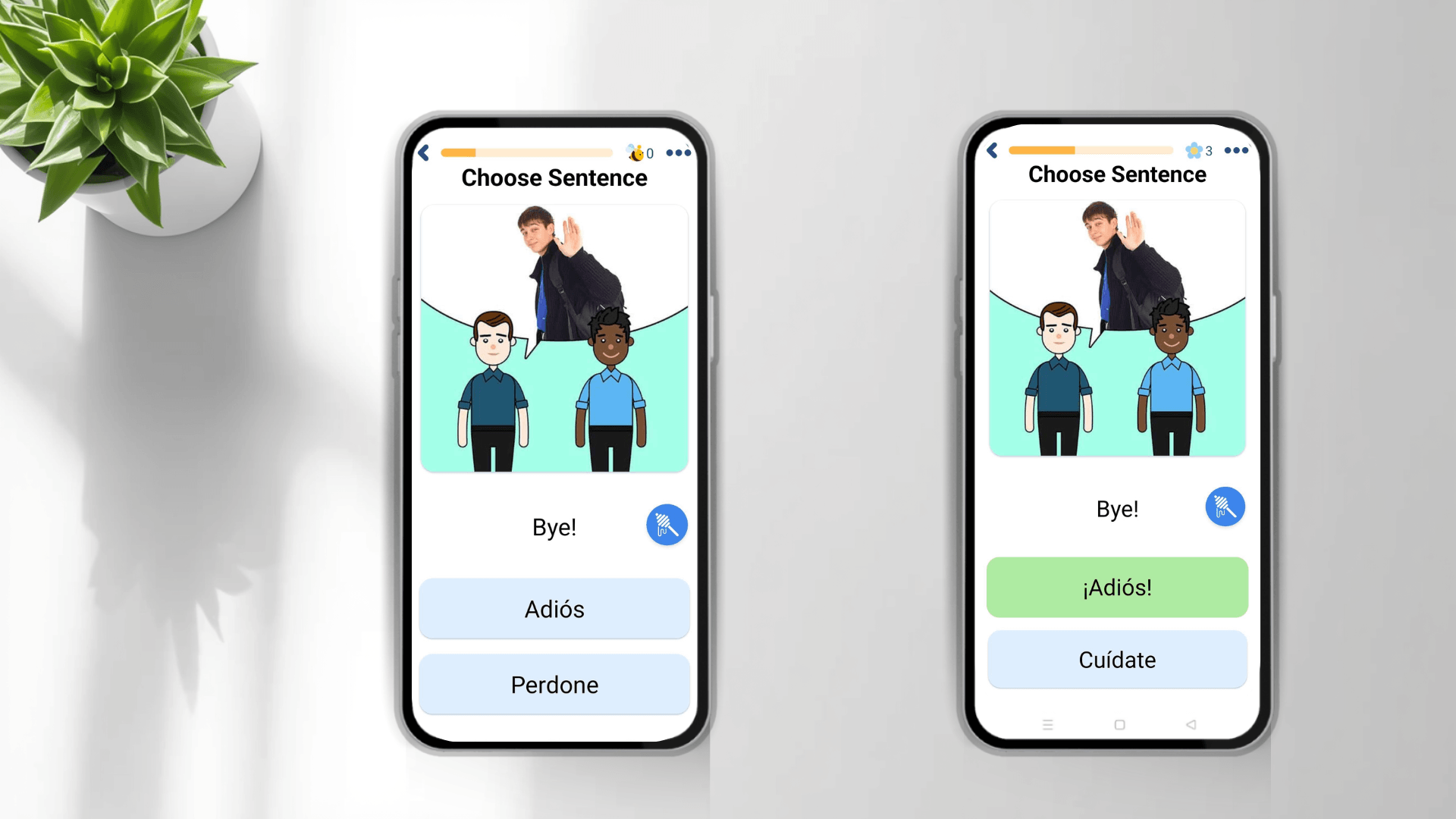
If you want to speak confidently with your new friends in Spanish, FunEasyLearn is the only pocket companion you need. It teaches you over 6,000 words and over 5,000 sentences, from saying “hello” and “goodbye” to ordering lunch, asking for directions, and more. Join the award-winning app beloved by millions of speakers worldwide to pick up Spanish and 34 more languages.
💬 Speak like a local. Learn the words and sentences native speakers really use in their daily conversations.
🔉 Sound natural. The audio in the app is recorded by native speakers in professional studios, so you can learn the correct pronunciation from day one.
🎧 Learn anytime and anywhere. With the offline mode, you can learn even with an unstable internet connection, for instance, on the subway. Activate hands-free mode to learn languages on the go, while running errands, waiting, or doing household chores.
🧠 Remember what you learned. Instead of cramming vocabulary, review words and sentences at the right time, right before you forget them. The smart review system locks words into your memory faster and for longer.
✏️ Make it yours. Create custom vocabulary lists for your life. Practice for a job interview, restaurant orders, travel arrangements, and more. Study exactly what you need for the conversations you will have soon.
🎮 Have fun learning. We learn better when we are relaxed. For that reason, FunEasyLearn has more than 35 games that you can play to learn a language. And the best part is that you can choose which games to play. Turn practicing Spanish into your favorite activity.
How would you like to speak Spanish fluently?