






St. Joseph's Day is recognized as one of the most fascinating holidays with an intriguing history and colorful local traditions. Rooted in a medieval legend, the event remains one of the most beloved Sicilian customs and has spread to other regions. Are you ready to explore what St. Joseph's Day is, where it comes from, and how it is celebrated? And most importantly, why are fava beans the stars of the feast of Saint Joseph? It's time to unweave the narrative and get a better understanding of the customs associated with the holiday.
What is St. Joseph's Day?
In a nutshell, St. Joseph's Day is the Catholic feast on March 19 honoring St. Joseph (Santo Giuseppe), husband of Mary and earthly father of Jesus. The holiday narrative starts in Medieval Sicily amid a severe drought. Italians prayed to Saint Joseph, the protector against hardship, to save them from starvation. The Catholics promised to hold a banquet for the poor if their prayers were answered. The legend says that a miraculous rain followed, saving the fava beans, thus preventing a fatal famine. When the rains fell, Sicilians kept their promise and had a feast in honor of the saint who helped them survive.
At the first recorded celebration, tables were covered with meatless dishes made from fava beans, bread shaped like carpenter tools to reflect the saint's trade, and seasonal fruits and vegetables. Cheese was notably absent—this was due to dairy shortages caused by the drought, and so it was not part of the first feast.
March 19th is St. Joseph's Day in Italy. The holiday gained popularity in southern Italy, then spread to Sicilian immigrant communities such as those in New Orleans. In some areas, like Palermo, they have bonfires, and children dress up as beggars, going from house to house reciting prayers and asking for blessed food scraps. This tradition reenacts the medieval drought. By the 19th century, Pope Pius IX declared Joseph the patron saint of the Universal Church, further popularizing the holiday.
Where Is St. Joseph's Celebrated?
Saint Joseph's Day is mainly celebrated in Sicily, with traditions spreading to countries such as Malta, Spain, Poland, Canada, Switzerland, Colombia, and, notably, in Italian-American communities in the US.
In Sicily, St. Joseph's Day tables have fava beans, lentils, and pasta, with cheese absent to recall famine-era shortages. Wealthier families host buffets for the underprivileged.
Malta marks San Ġużepp with a public holiday that features processions, band marches, picnics, and fireworks.
In Spain's Valencia, St. Joseph's Day falls on the same day as the Fallas festival, known for fireworks and meatless meals. Other regions, such as Murcia, Galicia, and Madrid, also celebrate.
In Poland, St. Joseph's Day is celebrated locally with social gatherings, red attire, polka dancing, vegetarian pierogi, and family meals, though it isn’t a public holiday.
Italian-American communities in the US celebrate St. Joseph by blending feasts, parades, and charity events, continuing Sicilian traditions in a festive context.
How is St. Joseph's Day Celebrated?
St. Joseph's Day is celebrated to express thanks and practice kindness. In Sicily, it blends ancient rituals with modern events and family feasts. Since the holiday is religious at its core, Catholics first attend the traditional mass to honor St. Joseph. Home altars typically include dishes of fava beans, candles, pastry, and seasonal fruits. In Italy and the US, processions include statues, parades, and altars with food donations. Meanwhile, in Malta, the day is all about band marches, picnics, and fireworks. In some areas of the US, the festivities are shifted to June so that everyone can enjoy better weather and live music, and invite vendors.
Red clothing is considered traditional, symbolizing love and the blood of martyrs. Countries such as Italy, Poland, and the Czech Republic follow this custom. The color green is also representative of the holiday, evoking Joseph's carpenter's apron.
The fava beans are considered lucky. They kept Sicilians fed during the famine while they prayed for a miracle. Nowadays, they are blessed on altars and traditionally eaten on St. Joseph's Day. They are thought to bring prosperity. However, dried fava beans are considered bad luck.

Speak a new language with confidence!
Build fluency faster with FunEasyLearn — just 10 minutes a day is enough to make real progress.
Vocabulary for St. Joseph's Day
In each of the countries that celebrate St. Joseph's Day, there are a few phrases and sentences that are usually used. It's worth noting that the holiday doubles as a celebration for those bearing the saint's name, primarily in Italy, Poland, the Czech Republic, and Slovakia.
Italian
In southern Italy, people named Giuseppe celebrate the feast as a second holiday. Friends and family wish them "Buon onomastico!" (Happy name day), and offer them flowers, pastries, and small gifts. Other expressions include the following:
· "Buona festa di San Giuseppe!" - Happy St. Joseph's Day!
· "Tavola di San Giuseppe" - St. Joseph's Table
· "Festa del Papà" - Father's Day
· "Grazie, San Giuseppe" - Thank you, St. Joseph
Spanish
In areas such as Valencia and Murcia, March 19 doubles as Father's Day with Fallas fireworks. Friends toast dads and name-day honorees with pastries like "buñuelos." Common phrases include the following:
· "Feliz Día de San José!" - Happy St. Joseph's Day!
· "¡Feliz Día del Padre!" - Happy Father's Day!
· "Gracias por tu protección" - Thanks for your protection
Polish
In Poland, March 19 serves as "imieniny Józefa" (Joseph's name day) for those named after the saint. Celebrations include polka dancing, vegetarian feasts, and red attire. On this day, families gather more than for birthdays.
· "Dzień Świętego Józefa" - St. Joseph's Day
· "Wesołego Święta!" - Happy feast!
· "Duszo moja" - My soul (the title of a beloved Polish hymn traditionally sung on St. Joseph's Day)
· "Wszystkiego najlepszego z imienin!" - Best wishes on your name day!
Czech
In the Czech Republic, Josef is among the most common male names historically. For that reason, March 19 is a popular celebration. People mark the day with toasts, pub gatherings, and family dinners. Red neckties or dresses are the preferred attire for the holiday.
· "Sv. Josefa" - St. Joseph's Day
· "Všechno nejlepší k meninám!" - Best wishes for name day!
· "Na zdraví, Josefe!" - Cheers, Joseph!
· "Díky, svatý Josef" - Thanks, St. Joseph
Slovak
In Slovakia, March 19 is Jozef's name day, celebrated with simple family meals, church prayers, and folk dances at local halls.
· "Sviatok sv. Jozefa" - St. Joseph's Day
· "Na zdravie k meninám!" - Cheers for name day!
· "Ďakujem, svätý Jozef" - Thanks, St. Joseph
· "Všetko najlepšie k meninám!" - Happy name day!
Learn Languages with FunEasyLearn
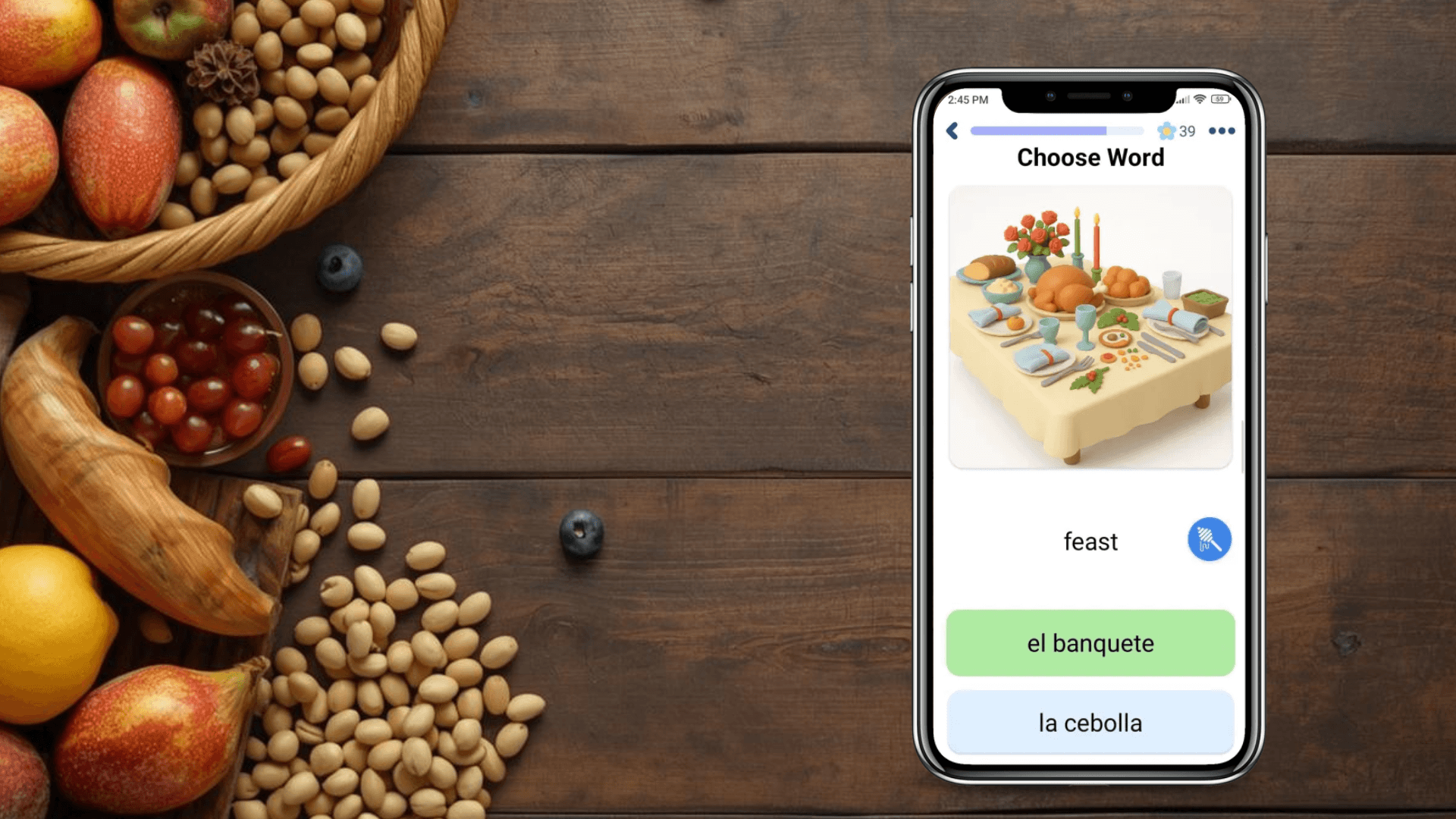
If you're on a mission to learn a language fast and well, FunEasyLearn is the ideal pocket companion. Trusted by millions of language learners worldwide, the application is an excellent vocabulary builder. Based on the principles of the lexical approach to language learning, the content is carefully structured by a team of experienced ed-tech professionals and certified translators. The illustrations for each word and sentence are designed to help users memorize new vocabulary more effectively. They are especially practical for visual learners. Other perks of the app include the following:
🦜 Practical vocabulary. Learn the most frequently used words and sentences in a new language. Focusing on the top-most used vocabulary allows you to speak faster with confidence. Engage in everyday conversations from the first day of practicing a new language.
📂 Well-structured content. The app features 350+ logical topics and subtopics that help you learn new vocabulary in context and make it easier to find the words and sentences you need. On top of that, all topics are unlocked for you to explore and learn without any restrictions.
🎧 Hands-free mode. Learn anytime, anywhere with hands-free mode and, optionally, a pair of headphones. Whether you're practicing another hobby, doing some chores around the house, running errands, commuting, or walking the dog, you can also review the vocabulary for a topic or learn a set of new words or sentences.
⭐ Favorites. Save your favorite words or the most challenging ones to separate lists. Review them in list mode or learn them with your favorite educational games.
🔁 Review. A smart review system will help you memorize new words and sentences faster and for longer. The trick lies in the algorithm that calculates exactly when to review the material for the best results.
Are YOU ready to really learn languages?