






How would you like to speak a new language in months, not years? According to science, that is entirely possible. Of course, it takes discipline and knowing the right path. As a language learner, you don't have to reinvent the wheel or spend years practicing with outdated methods.
Science has cracked the code to effective language learning, so that any language learner can maximize their results. We're presenting 7 tricks that can help you achieve fluency in a new language in record time. And the best part is that you don't have to use all of them at once. Choose what works best for your case, and make your language-learning journey a success. Whether you're looking for the best way to master a new language or brush off some high-school Spanish, the golden nuggets below are sure to improve your experience.
Tip #1. Immerse Yourself in the Target Language
In simple terms, immersion is a way to learn a new language in which the learner is in a native environment, surrounded by authentic content. Picture a learner who moves to a country where their target language is spoken. Of course, they learn much faster and start speaking more confidently. After all, they hear the language everywhere: on the street, in restaurants, cafes, and public institutions. On top of that, the newcomers have to interact with native speakers constantly.
From greeting a neighbor to navigating a new city or doing the shopping, communication is inevitable. Moreover, they must read information in the new language, from road signs and working hours to menus and official letters. As a result, since the new language surrounds them, they master it faster and better.
The bad news is that not everyone can move to a new country to learn a new language. The good news is that you have an alternative. You can surround yourself with native materials from the language you want to practice. For example, you can listen to songs and podcasts in your target language. And you don't even have to understand everything. Your brain will pick up details such as intonation, the most frequent words and expressions used in specific contexts.
Research indicates that the immersive language-learning method is particularly effective with adults. It is much easier to learn the language when you see and hear it daily.
Tip #2. Learn the Most Frequent Words
The best way to learn a language is by mastering vocabulary. In fact, the number of words you know is one of the metrics used to assess your level.
Paul Nation, a Professor of Applied Linguistics, spoke about the three major groups of words in a language:
- High-frequency
- Mid-frequency
- Low-frequency
In the high-frequency vocabulary range, there are around 3,000 words. Those are the words native speakers use most often. It makes sense to focus on them first, as they account for around 65% of everyday conversations. Once you can understand and use the words and phrases on this list, you can focus your attention on the most relevant topics for you. For example, if you learn a foreign language for work, you would dive into vocabulary related to your daily tasks and professional jargon.
You only need between 300 and 500 words to make simple dialogues. That's a great starting point, and most learners take under a month to learn them. Of course, factors such as similarities between the native and target language and how often the learner practices play an essential role.
Tip #3. Use Spaced Repetition
Your brain is designed to forget. The "Ebbinghaus Forgetting Curve" shows that we rapidly forget new information unless we actively review it. Spaced Repetition Systems (SRS) help you memorize better by prompting you to review vocabulary just before you forget it. That way, every study session enables you to learn the new words better.
The method uses flashcards, whether physical or digital. Each card includes a word or phrase in the target language, and the translation on the reverse. First, you learn the entire list, then categorize the cards into two piles: the ones you know, and the ones you don't know. The pile with the more challenging items needs to be reviewed more often. A popular pattern is testing difficult words on days two, three, five, and seven.
How does spaced repetition change your language-learning routine? Well, instead of cramming for hours, you can focus for 15-20 minutes daily to review the most challenging words and phrases. This scientifically-proven technique ensures words move from your short-term to your long-term memory with minimal effort.

Speak a new language with confidence!
Build fluency faster with FunEasyLearn — just 10 minutes a day is enough to make real progress.
Tip #4. Start Speaking from Day One
Perfectionism is the enemy of progress. The statement also applies to language acquisition. A common mistake many beginner learners make is to focus on reading and listening, avoiding production skills - writing and speaking. That's not the best way to learn a second language. Instead of waiting until you can perfectly pronounce every single word, linguists and teachers recommend you speak the language from day one.
One effective way to speak sooner is by using the shadowing technique. You essentially learn new vocabulary by repeating after a native speaker. Polyglots use this technique to speed up their learning process. Some of the benefits are practicing pronunciation, picking up grammar rules on the go, and developing good listening skills. Millions of people worldwide learn English by watching popular TV shows and repeating what they hear.
Tip #5. Challenge Yourself
Growing starts when you step out of your comfort zone. To learn a language fast, Stephen Krashen suggested applying the principles of comprehensible input. That means using material that is slightly above your current level, in a fashion similar to babies learning new words. For example, you could learn a topic for a more advanced level. Another example is watching a movie without subtitles in your native language.
Micro-challenges are effective when you want to learn languages faster. They provide clear, short goals and give you a sense of accomplishment. That, in effect, acts like a dopamine hit for your brain, fueling your brain with more motivation to keep studying.
Tip #6. Learn Vocabulary in Context
Learning your vocabulary in context, rather than isolated lists, helps you memorize faster and for longer. Craik and Tulving’s Levels of Processing framework (1975) revealed that information processed in meaningful contexts, such as sentences or situations, is more likely to be retained.
Experiments showed that language learners who practiced new words and phrases in context remembered them better. Neuroscience explains that the brain doesn't learn words like a dictionary, in random order. Thematic vocabulary, sentences, and short stories help you learn faster. Moreover, connecting the words in a list is a highly effective technique, even if you make up ridiculous stories that don't make sense. Exaggerations stick to your memory even better.
Tip #7. Gamify Everything
Turn your language-learning journey into a fun game. That way, you trigger your brain's reward system and better memorize new information. The easiest way to gamify the learning process is to reward yourself after each learning session. For example, you can watch your favorite TV show, go for a quick walk outdoors, or have your favorite treat. Another example is naming the objects around you during your commute or when waiting in line. Pretend to host your own cooking show and explain your steps as you make dinner. Gamification makes the learning process more enjoyable and effective.
Learn Languages Fast with FunEasyLearn
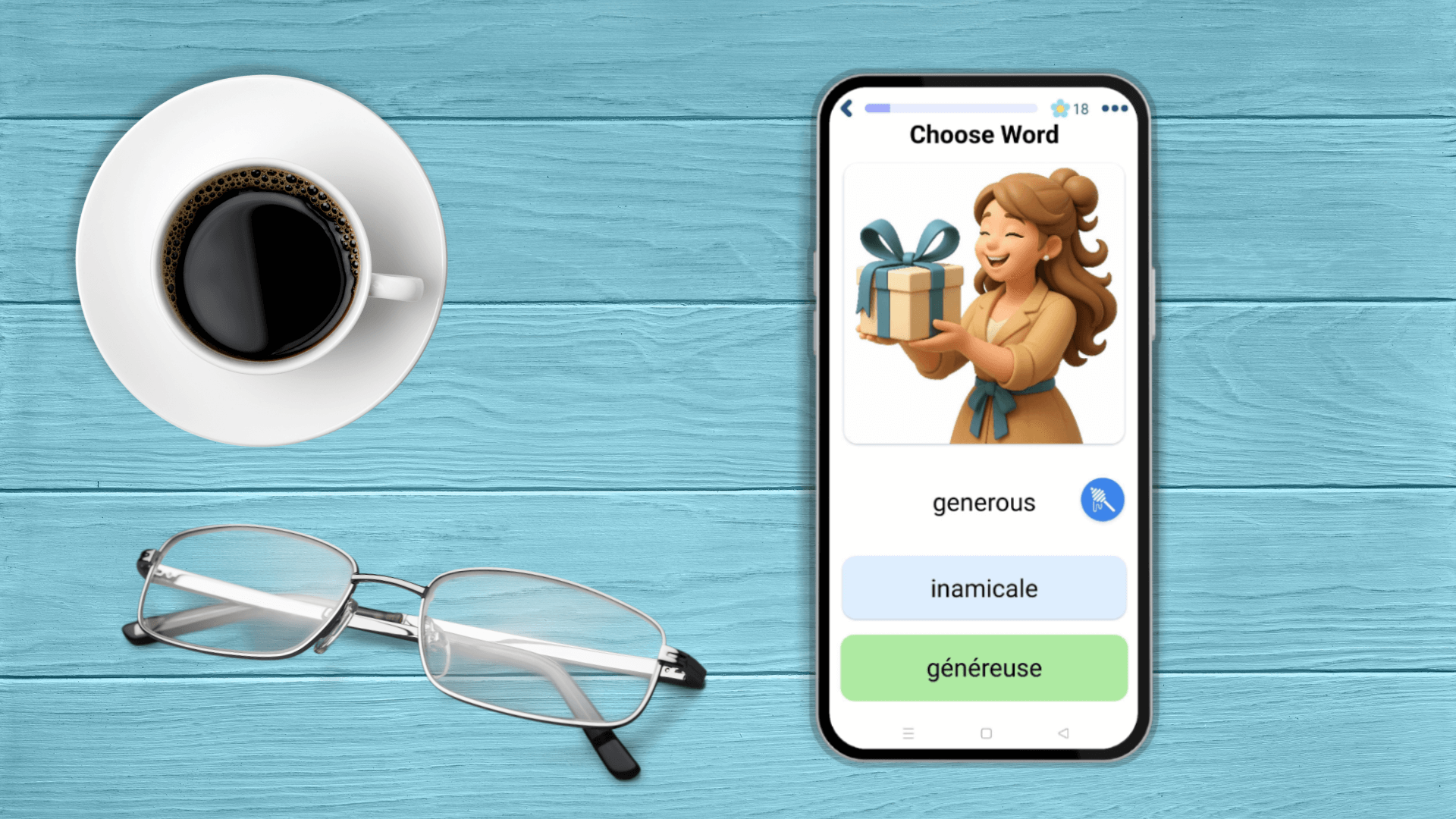
Turn language-learning into an enjoyable activity with the award-winning app that combines the best practices to help you memorize vocabulary. Access FunEasyLearn to learn languages almost effortlessly.
- Immerse yourself in the target language, with examples from daily life. When you feel confident enough, switch the app menu to the target language for more useful practice.
- Learn high-frequency-vocabulary. FunEasyLearn is built on the principles of the lexical approach, developing fluency through a rich vocabulary and word chunks that speed up learning.
- The Review feature helps learners memorize the new words and sentences. Its algorithms calculate exactly when you need to review vocabulary, based on your activity.
- It's easy to start speaking right away with FunEasyLearn. The first study sessions are sweet and short, as recommended for beginners. As you gain more confidence, add the next level. On top of that, you can check your pronunciation with the tap of a button due to the Speech Recognition technology.
- Learn vocabulary in context with more than 350 useful topics and subtopics. Premium learners can also search through all of them to find the right word or sentence when needed.
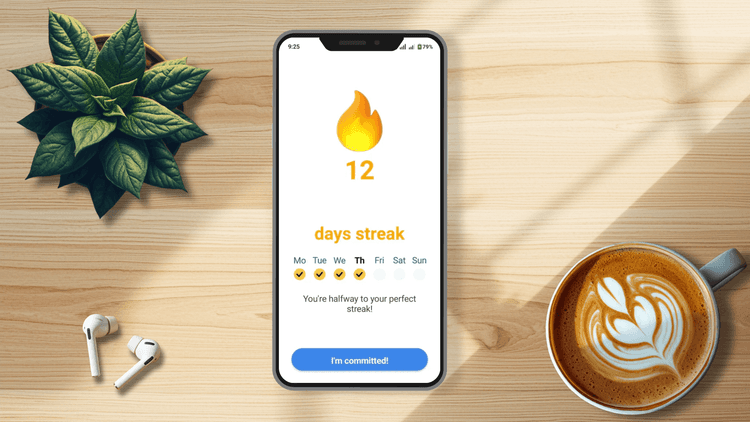
- Enjoy the benefits of educational games. Learning languages can be entertaining. FunEasyLearn encourages you to make progress with fun games, rewards, achievements, and stats to track your progress.
Are you ready to learn a new language fast?